Recording Character Motions
The character motions created in iClone can be sent to Unreal to control the character. Furthermore, these motions can be recorded in Unreal for further usage. With Unreal v 4.21, the character's motions are kept by means of the Sequence Recorder.
Mapping Characters in iClone and Unreal
- Prepare a character in Unreal and iClone by one of the 3 methods below:
- Connect iClone and Unreal with Live Link plug-ins.
- Playback to view the character motions in Unreal authoring mode.
- Go to the start frame in iClone.
Recording Character Motion in Unreal
- In Unreal, select the controlled character.

- Open the Sequence Recorder panel, click the Add button to add the character into the list.

- Press the Record button to start recording.

The Unreal viewport will start to countdown.
- Play back the project in iClone to animate the character after the countdown ends up.
- Click the StopAll button in Unreal after the iClone project finishes.

- By default, the recorded file is saved in Content > Cinematics > Sequences > RecordedSequence folder.
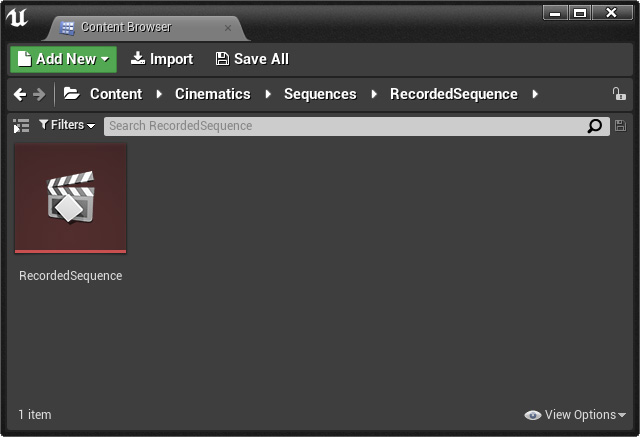
- Double-click on the sequence and you can see all the character's motion-related data in the Sequencer panel.
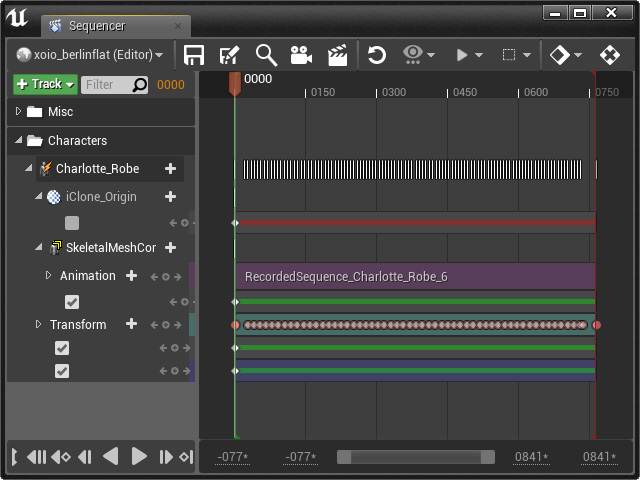
Examining Recorded Character Motion
- Select the character in the recorded sequence (marked with a lightning bolt).

* It is recommended that you hide the original character from the scene for better observation.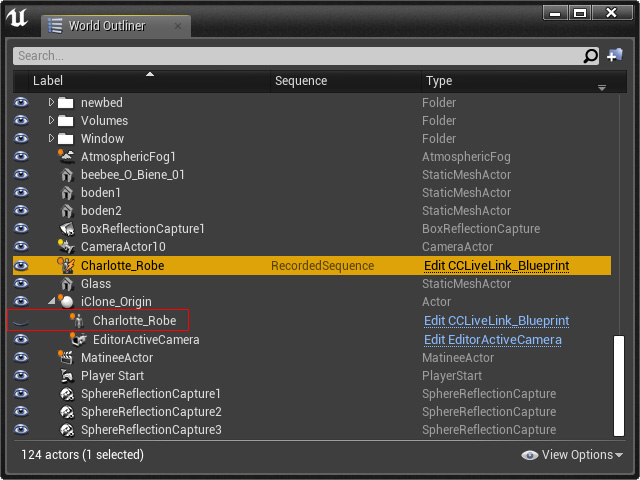
- In the Live Link section on the Detail panel, delete the Subject Name.

Keep in mind that this step ensure the character's motion coming from the recorded sequence instead of the character in iClone.
Alternatively, you can remove the source from the Live Link panel instead of deleting the Subject Name of the character.
- Click the play button to check out the recorded character motion.

- You will see the character motion result.
